BUM BUM BALM – 100% natural diaper cream

… ZINC-FREE! Why Zinc free? I am trying to use cloth diaper for my 1 year old daughter gradually and I heard that Zinc is difficult to wash out of cloth diapers, and it creates a ‘waterproofing’ on the cloth diaper which causes urine, etc. to run out the sides of the diaper. So I decided not to use zinc oxide cream and found out this BUM BUM BALM. This 100% natural diaper cream is a must in every diaper bag and an excellent choice for cloth diapers. It’s easy to use. Just apply to diaper area at each diaper change.
Pure, unbleached, Canadian beeswax provides a nice barrier on the skin, helping to keep moisture away, while organic Calendula oil provides natural healing properties for rashes.
Ingredients: Coconut Oil, pure unbleached Beeswax, organic Jojoba Oil, Apricot Kernel Oil, Organic Calendula Oil (infused in Sunflower Oil), Cocoabutter, Vitamin e Oil (derived from pure Soybean oil), pure Lavender essential oil.
It is rated one of the safest & best natural diaper cream picks by CosmeticDatabase.com
Making your own baby food
To make your own baby food for your baby, you’ll want to keep simplicity and purity in mind. Fresh organic carrots, steamed and mashed, are a perfect meal for a baby. No need to add salt, sugar or spices because babies’ taste buds are very sensitive and don’t need flavor enhancement. Once you start making your own baby food, you’ll find it hard to go back to jarred food. Nothing can beat the economy and freshness of homemade baby food.Simple cooking methods that preserve nutrients are healthiest for your child. Steam, don’t boil. Bake, don’t fry. Your goal is to keep your baby’s food as close as its natural state as possible while ensuring that it’s fully cooked. After the food is cooked, puree it with a blender, food processor, or hand-cranked food mill.
As your baby grows and time marches on, food presentation and creativity may encourage her to eat well. Few parents can resist the joy of watching their children eat nutritious homemade food.
Here are some recipes I like to make for my daughter:
Chicken and Avocado “Salad”
1/2 cup cooked chicken
1 cooked carrot, diced
1 teaspoon butter, at room temperature
1 ripe avocado, peeled, pitted, and diced
1.Mash the chicken, carrot, and butter together in a bowl.
2.Add avocado mash.
Soft Carrot Sticks
Baby carrots
Oat or rice cereal, crushed
1.Cook the carrots in boiling water until very soft. Allow to cool.
2.Roll the carrots in crushed cereal for easier gripping.
Why organic baby food
- According to the book Green Babies, Sage Moms, pesticide use has increased thirty-three-fold in the United States since the end of the Second World War.
- Children eat drink, and breathe more pesticides, pound per pound, than adults; plus they have a tender immune system and their bodies are growing and developing.
- A study of Seattle schoolchildren showed that those were fed nonorganic diets had six times the amount of pesticides in their urine than children who were fed organic diets.
As we know that pesticide exposure poses a very significant risk to the development of babies and children. Just for this reason, I want my baby have organic natural food as much as possible.
Natural Baby Shoes

How old should a baby starting to wear shoes? To answer that question lets learn something interesting about the development of the baby’s feet. Babies are born with only 22 of the 26 bones they will eventually have in their feet. Their feet also have a more soft tissue than bone, making them vulnerable for injury and malformed. So you should only put infant shoes on your baby’s feet when going out and leave them barefoot whenever possible, this way their feet can grow naturally and healthily. When selecting baby shoes and socks for your baby, make sure they are loose fit so there will be room for your baby’s feet to grow. If you can tickle your baby’s feet and toes a few times daily, the flexing and scrunching reaction by your baby will allow the feet to build strength and promote better growth. Shoes are necessary when your baby is starting to walk outside. At this point, podiatrists recommend baby shoes that are flexible and lightweight, with soft, nonskid soles. A good pair of baby shoes will protect your baby’s fragile feet while allowing her to learn how to balance.
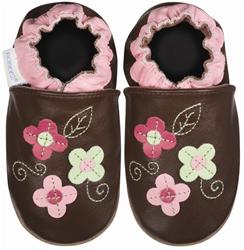
To pick the perfect pair of infant shoes for your baby you need to consider the fitting, softness and protective function of the shoes, you should also consider if you want to get a pair of conventional baby shoes or pair of natural baby shoes. Conventional shoes come in many styles. Among those, miniature running shoes, hiking boots, sandals and other stylish footwear are very tempting to parents, but who could imagine that these children’s shoes are sewn or glued together with synthetic, un-breathable materials and are definitely not the best for wee feet. Most of these shoes are made with potential harmful materials and their designs are for style and look. They are not flexible at all to allow for ideal foot growth. What is worse is that many of these shoe manufacturers do not care about the fact that babies are often put their feet in their mouths, even while they have their shoes on. Either way, harmful materials from these shoes, such as BPA, glue and adhesive materials can all lead to your baby’s body through mouth intake. So what should you do about that you may ask? The solution is the healthier option, “Natural Baby Shoes“. The best choice of baby shoes is a leather shoe made in Europe that comes in various color and pattern selections. Leather used in making of baby shoes is tested for toxicity and must meets the British and European safety standards before it is allowed to be sold in the market. Same standards are not found anywhere in the United States as we speak and hopeful soon the standard will be adopted in North America. Shoes that meet the stricter European standards for toxicity standards will give you a level of comfort and confidence that you no longer have to keep your eyes on your baby to stop her from putting her feet into her mouth. Not all shoes are made the same even when they look the same so research the company before you place your purchase. For non-walking babies, there are fleecy cotton shoes and booties on the market that come with an adjustable snap or string-pull closure to fit your baby’s feet for several months. The design of these cotton shoes will prevent your baby from pulling them off easily but at the same time allow some breathing room for your baby’s feet to grow comfortably.
Conventional Disposable Diapers VS Organic Natural Diapers

There are two general categories of diaper parents can choose for their babies. Option one is cloth diaper and the other is commonly used disposable diaper. Your decision regarding which one to use will not be an easy one, especially if you concern about the environment, the health of your babies and the convenience of use. If you are a parent with your first baby then you must know that down the road you will have to handle diapers a few times a day for several years after your baby is born. You must also know that your baby will be wearing diapers 24/7 until he/she is finally mastered the toilet training. This will take a baby on average 3 to 4 years to do. What is that mean? Depending on year your choice of diaper is, your baby’s most sensitive body part will be pressed against the toxic chemicals and materials for that period of time.For the environment and health reason cloth diaper that is made of organic cotton cloth is definitely the best choice. For convenience the disposable diaper will win the race, no doubt about it. There is however a new choice/product that is just being introduced to the market. This is the flushable diapers. Because these diapers will dissolve in the water after you give them a few stir they can be flushed down the toilet. These diapers contain no chlorine and no fragrance and so they are very environmental friendly and is a healthier choice than ordinary disposable diapers.
It was said that conventional disposable diapers are one of the most remarkable invention human ever came about creating. This makes many parents’ life much easier. The absorbing power of the extremely thin disposal diapers is achieved through the use of an amazing assortment of bleached paper fibers, plastics, moisture-absorbing gels, and other chemical materials. Leave aside other materials just listed bleach alone is one of the most toxic substance that one can put against the fragile tender skin of a baby. The moisture absorbing gels used in the disposal diapers are also substance that might cause long-term health problem to the new born. The plastic used in the diapers are not reusable and are not readily decomposable after discarded. The number of daily disposed diapers around can cause serious environmental threats.
For a friendlier choice, the cloth diapers, especially those made of organic cotton, offer no harmful substance to both your babies and the environment. If you do go with cloth diaper, ensure you choose the diaper cover to eliminate the need for pins. Although many diaper covers are made of plastic, they can be used multiple times and are not in direct contact with babies’ skin. You might also consider the use of disposable, biodegradable non-chlorine diaper liners to go with the cloth diapers. These can be ordered online, if you need help finding them, let me know and I can show you a few good ones. This will allow you to flush the contents of your baby’s dirty diaper down the toilet. After the lining is removed and flushed, store your used diapers in a metal or non-plastic diaper container with a closable lid or cover. Line the container with a washable fabric liner or a biodegradable garbage bag so that no harmful substance is to leak into the diaper and no harm is done to the environment. If you go with cloth diapers, the best option for you and your baby is to launder them at home. This is not an easy commitment, especially for working parents. But if you have all the gear you need at home, your life will not be as bad as you might think. When it comes to time to wash the cloth diapers, keep them separate from the rest of your laundry and only wash the diapers with non-chlorine bleach and a soap-based nontoxic detergent. If washing organic cotton diapers at home is out of this world to you, you can choose the gel-free disposable diapers as an alternative.
Here is a quick summary of the Pros and Cons of the cloth diapers and disposable diapers in case you are busy taking care of your baby and have no time to come back to this document in the future:
Cloth Diapers:
Pros:
- Organic cotton is the only material that touches your baby’s skin. No plastic, chlorine or other chemicals will touch your baby’s tender skin.
- On average, a single diaper can be reused for up to 100 to 150 times and then recycled.
- Waste goes into the sewer and not a landfill.
- More economical with savings of up to $1,000 per child.
- Facilitates earlier potty training because baby will learn to avoid feeling wet.
Cons:
- Takes work to create a leak-free system
- Requires more energy, water in washing and time of the parents.
- More complicated to assemble products and accessories, such as liners and covers.
- Diaper services often use chlorine bleach and detergents with strong fragranced fabric softeners, this creates environmental issue and irritation to the baby’s skin.
Disposable Diapers:
Pros:
- Convenient and easy to use.
- Requires less effort, energy of the parents and also save water.
- Some day-care centers require the supply of disposable diaper when you drop off your kid.
- Some brands are biodegradable.
Cons:
- The disposable diapers go to landfills, where even biodegradable diapers do not degrade.
- Most disposable use plastic in a non-sustainable production manner
- The dioxins, solvents, and heavy metals used in production leak into the environment. Traces are next to your baby’s kin.
More details of the above products can be found at: BabyEarth.com
Swine Flu H1N1 – Parents be alert!
Swine Flu or “H1N1 Flu” outbreak is currently a serious potential health threat to many people, especially parents, babies and young infants. When a baby got infected with the H1N1 Flu they will not show any sign until fever comes and the baby becomes extremely sick. So during this critical time parents should constantly check on their babies to ensure no fever or their babies are not acting abnormally. New born babies or young infants can’t talk and can’t express their feeling to their parents when they are not feeling well. Babies will cry when there is something wrong so when your babies cry more than they normally did or at an abnormal time of the day, you should check their temperature with the thermometer. If you don’t have one, you should get one at any drug store or baby supply store. If there is a fever, bring your baby to the emergency clinic immediately.Pig Flu, Swine Flu or H1N1 Flu has spread very quickly, from only a few identified cases to many in a few short weeks and many have been killed from this infection. There is no vaccination or medicine for this flu as of yet because it is still a relatively new virus formed due to either change of global climate or due to something we human did to the world that has facilitated the existing virus in animals to mutate into something that can now harm us humans. Medical scientists are now in the process of researching, testing and developing a vaccine and medicine for the virus but it is not a simple and speedy process. It will take at least a few months until something tangible can be established.
We parents love taking our babies to early year centers, infant classes, parenting classes or community centers so we can meet new friends and the babies can have some good time and fun. These centers are excellent places for parents to go and to break from baby sitting 24/7. It is also nice to have some companies at these places while our partner goes to work to earn a living for the family at this economic recession. At these centers parents can share their experiences, thoughts and just some gossiping to kill time while our babies play with each others to have fun. Because many people are there in these centers and we don’t know if any of them are sick, and if they are, with what kind of illness and if it is contagious? If one is infected with the Swine Flu, he/she can easily pass it to other parents and their babies are also at risk. Because unlike the SARS which threatened many countries around the world in 2003, this new virus can be transmitted from person to person even before the symptoms from the virus are developed or shown. This makes the Swine Flu very dangerous. Think about an infected person at the parents center sneeze onto his/her hand and he/she picked up a piece of toy for the babies. Or he/she sneeze directly onto a piece of toy which a baby picked up and chewed on it. The baby will be infected with the virus and this baby chews on other toys which the other babies pick up and chew on them as well. In this case, all babies and parents can be infected in no time. I am not exaggerating and from my own experience, whenever there is a person (a parent or a baby) with a cold, seasonal flu or stomach virus in these centers, you will see many babies and parents who attended the same center will get the same infection the very next few days. This is an example of how easily virus or illness can be transmitted from a person to vast population in a very short period of time.
I am writing this article to alert parents of how vulnerability people get infected with diseases and viruses regardless of where they are if they are not careful. I have no intention of discouraging you to attend any of the parenting centers as they are great places to be. You may want to hold back from a few weeks and keep your baby home until the virus dies down just to be on the safe side or if you do attend these places, be very careful of your personal hygiene, wash your hand thoroughly (for minimum of 30 seconds before rinsing the soap) as often as possible, and do the same for your babies. Watch your babies carefully, do not let them put toys or anything that is not clean in their mouth, this is kind of impossible to do but do try your best. When you see people coughing or with any sign of the flu symptoms, don’t let your kids or yourself go near them. Ok, be clean, watch your babies closely and stay healthy and safe.
Burt’s Bees Mama Bee Belly Butter

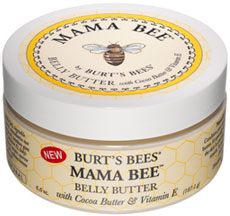
When you are pregnant, cosmetics can be especially appealing. But do you know that the lipsticks, mascaras you are using might be toxic to you and could be poison to your baby? I stopped to use all the make-ups and even stopped to perm and dye my hair since I was pregnant because I care a lot about my baby’s health. But I have to use lotion to keep my dry skin moisture. Skin is the largest organ of the human body. 60% of what we put on our bodies is absorbed into the skin and it is a direct pathway to your bloodstream. Choosing an organic product is must! Especially when the pregnant belly expands stretches and sometimes itches, the natural Mama Bee belly butter makes it feel soothing and wonderful. Continuing to use it post-pregnancy can help your tummy regain smooth. It’s a great gift for expecting mom for this coming Mother’s Day!